
Circular-Knit Defect Augmentation
Can neural style transfer and GAN augmentation help classify circular-knit defects with very few labelled examples, while keeping the defects visible?
Bachelor’s graduation project · proposal submitted 6 November 2026. Experiments and evaluation are planned; no classification results are available yet.
Research advice and useful help welcome. I plan to publish the findings.
Share advice by email- Dataset
- Planned: TSFabrics v1, Texture 1 (Double Piqué); Normal (including cutlines), V-line and Hole classes.
- Evaluation
- Planned: six augmentation conditions, recording-level splits, three classifier seeds and one locked held-out test.
Research questions
- Does combining NST and GAN augmentation improve classification compared with classical augmentation or either method alone?
- Does the order matter — NST then GAN, or GAN then NST?
- Can the generated images preserve thin V-line defects and small holes well enough to remain correctly labelled?
The project
NST and GAN Augmentation for Circular-Knit Defect Classification is my bachelor's graduation project at the University of London / European Universities in Egypt. I submitted the proposal on 6 November 2026. The experiments and evaluation are planned work; this page introduces the question and how I intend to investigate it.
Fabric faults can be subtle, and there may be very few labelled examples of each kind. Generating extra training images is one possible response, but only if the generated image still contains the fault that its label claims is there. A convincing fabric texture is not enough if a thin line or small hole has disappeared.
What counts as a defect?
The proposed study focuses on one circular-knit texture and three classes: Normal, V-line and Hole. Normal cutlines are production marks, so they stay in the normal class. A visible line alone does not establish a defect.
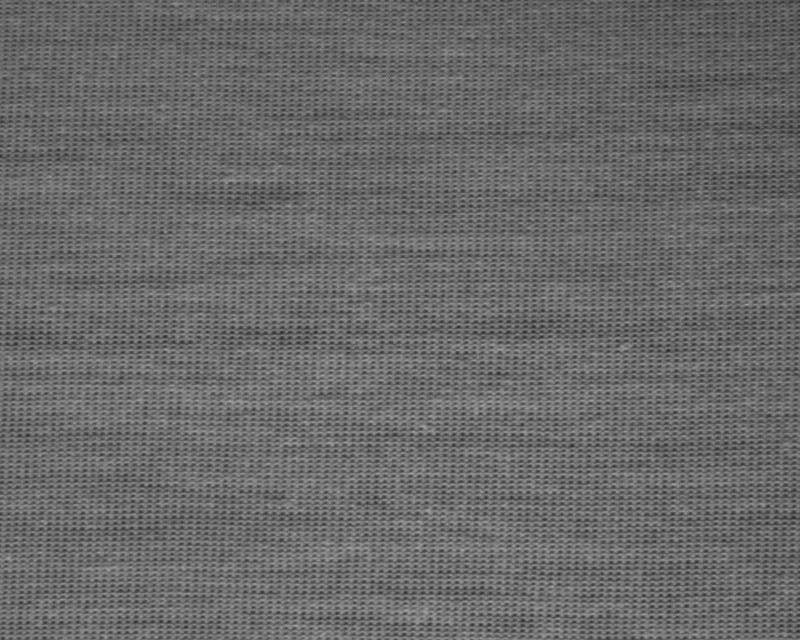
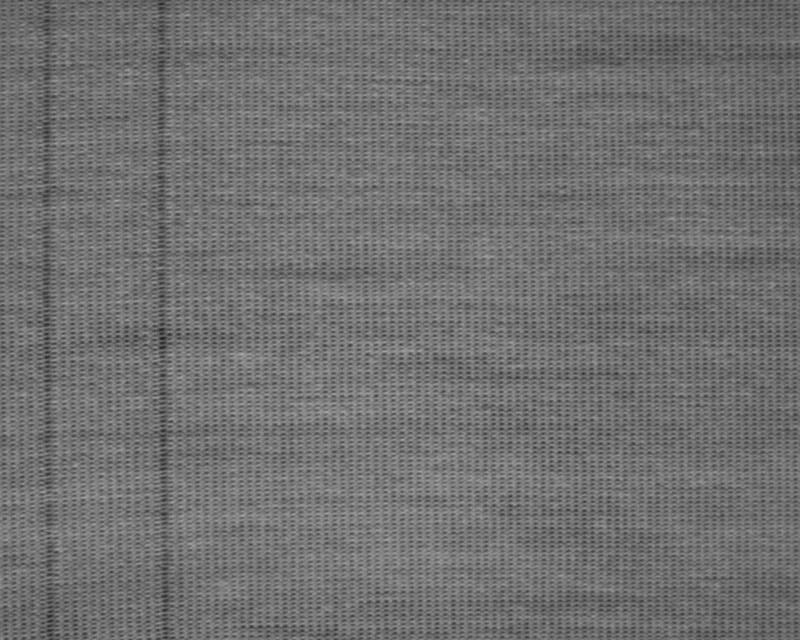
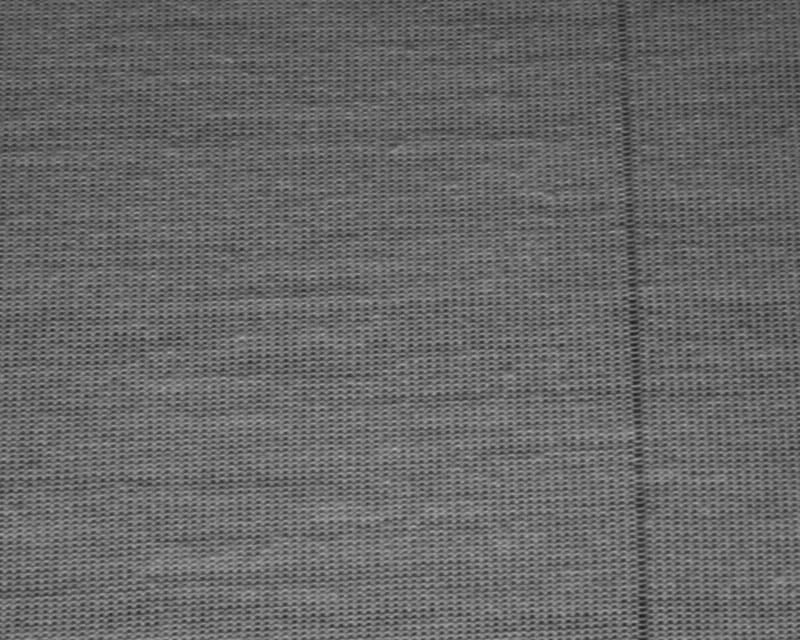
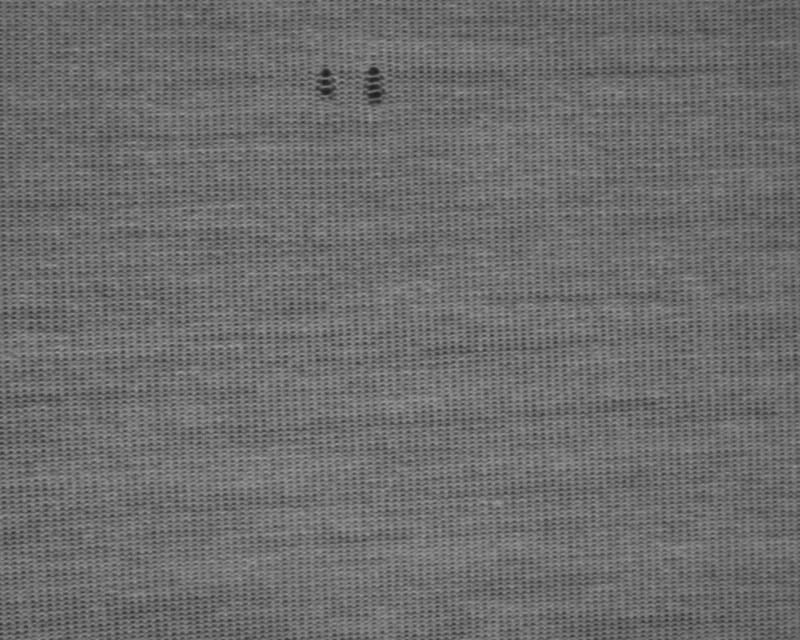
Real TSFabrics examples selected from the submitted proposal, slide 3. Ni et al. (2026), TSFabrics v1 (opens in a new tab) · CC BY 4.0 (opens in a new tab). Images reproduced unchanged and scaled for display; these are dataset examples, not generated results.
Planned comparison
The central idea is a controlled comparison. Each condition starts from the same proposed pool of 276 real frames: 256 normal, 10 V-line and 10 hole. The augmented conditions will receive the same number of accepted additions per defect class, so a larger training set cannot explain one method's advantage over another.
| Condition | Planned additional defect images |
|---|---|
| B0 · Real only | None; establishes the unaugmented baseline |
| B1 · Classical augmentation | Flips and modest brightness / contrast changes |
| B2 · NST only | AdaIN style transfer using normal training frames as styles |
| B3 · GAN only | DFMGAN defect-image and mask generation |
| H-A · NST → GAN | Style transfer before GAN adaptation |
| H-B · GAN → NST | Style transfer applied to GAN-generated candidates |
The target is up to 100 accepted additions per defect class in each augmented condition, reduced to a common count if quality review leaves fewer usable candidates. The classifier procedure stays the same: a frozen ResNet-18 backbone with a trained head, repeated with three seeds.
Keeping the comparison honest
Separate recordings, not neighbouring frames. The camera records video, so nearby frames overlap. The proposal separates training, validation and final testing by production recording. Training images and style references come only from the training recordings.
Check the fault before accepting the image. Candidates will undergo a blind review for retained, unclear, or wrong / absent defects. Masks support generation and review; they are never classifier inputs. Mask sparsity and Fréchet-distance measures will be logged alongside acceptance yield and compute cost.
Choose settings before the final test. Validation selects the style strength, checkpoints and primary hybrid. The held-out test recordings will be used once after those decisions are frozen. Planned reporting includes macro-F1, class recall, confusion matrices and false alarms on normal cutlines, including negative findings.
Proposed work plan
Only the proposal submission is complete. The remaining milestones below are internal targets from the proposal, rather than progress claims or confirmed deadlines.
- Submitted
Project proposal
Research question, controlled comparison and evaluation plan submitted.
- Planned
Audit the data and establish feasibility
Check recording groups and duplicates, pin the environment, and run a GPU timing pilot.
- Planned
Investigate style transfer
Build an NST portfolio, study sensitivity and optimisation, then establish the real-only, classical and AdaIN baselines.
- Planned
Generate and review candidates
Train DFMGAN, test both hybrid orders, review defect retention and match accepted image counts.
- Planned
Freeze, evaluate and write up
Compare six conditions across three seeds, lock settings before testing, then build a photo-checker demonstration and final report.
Scope and intended demonstration
This is a single-frame, few-label classification study, limited to one texture and two defect types. It will not establish performance across all fabrics, machine settings or lighting conditions, and a classification score would not demonstrate production readiness.
A small photo-checker demonstration is planned after evaluation: load a photograph, apply the saved preprocessing and classifier, then display the predicted class and raw model scores. It is a proposed deliverable, not an available application.
Research advice welcome
Publication plans
After completing the experiments, I plan to publish the research findings, including the comparisons, limitations and negative results. The project is currently at proposal stage; publication is an aim, with no manuscript submitted or publication confirmed.
Sources and selected material
This summary draws on my CM3070 final-project proposal, submitted 6 November 2026, particularly the research question, dataset scope, six-condition comparison, evaluation design and proposed work plan. The presentation itself is not published here.
- Dataset and fabric examples: Ni et al. (2026), TSFabrics v1 (opens in a new tab), CC BY 4.0 (opens in a new tab).
- Style-transfer method: Huang and Belongie (2017), AdaIN (opens in a new tab).
- Defect-generation method: Duan et al. (2023), DFMGAN (opens in a new tab).
The methods are proposed components of the investigation. No improvement over the baselines is claimed at this stage.
Original artifacts
- PRESENTATIONSelected proposal summary and work plan
Selected aspects of the proposal submitted on 6 November 2026, summarised on this page.
Public dataset by Ni et al. (2026), CC BY 4.0. Dataset examples are not project results.
Notes on evidence
- This is a submitted bachelor's final-project proposal, not a completed experimental study. No classification results are available yet.
- All training budgets, comparisons, evaluation measures and milestones describe the proposed work.
- The selected fabric images are real public-dataset frames reproduced from the proposal, not outputs of the planned generators.